How AI Is Changing the Way Small Businesses Work
 Adebayo Toheeb, CEO of PURITY·August 2026·9 min read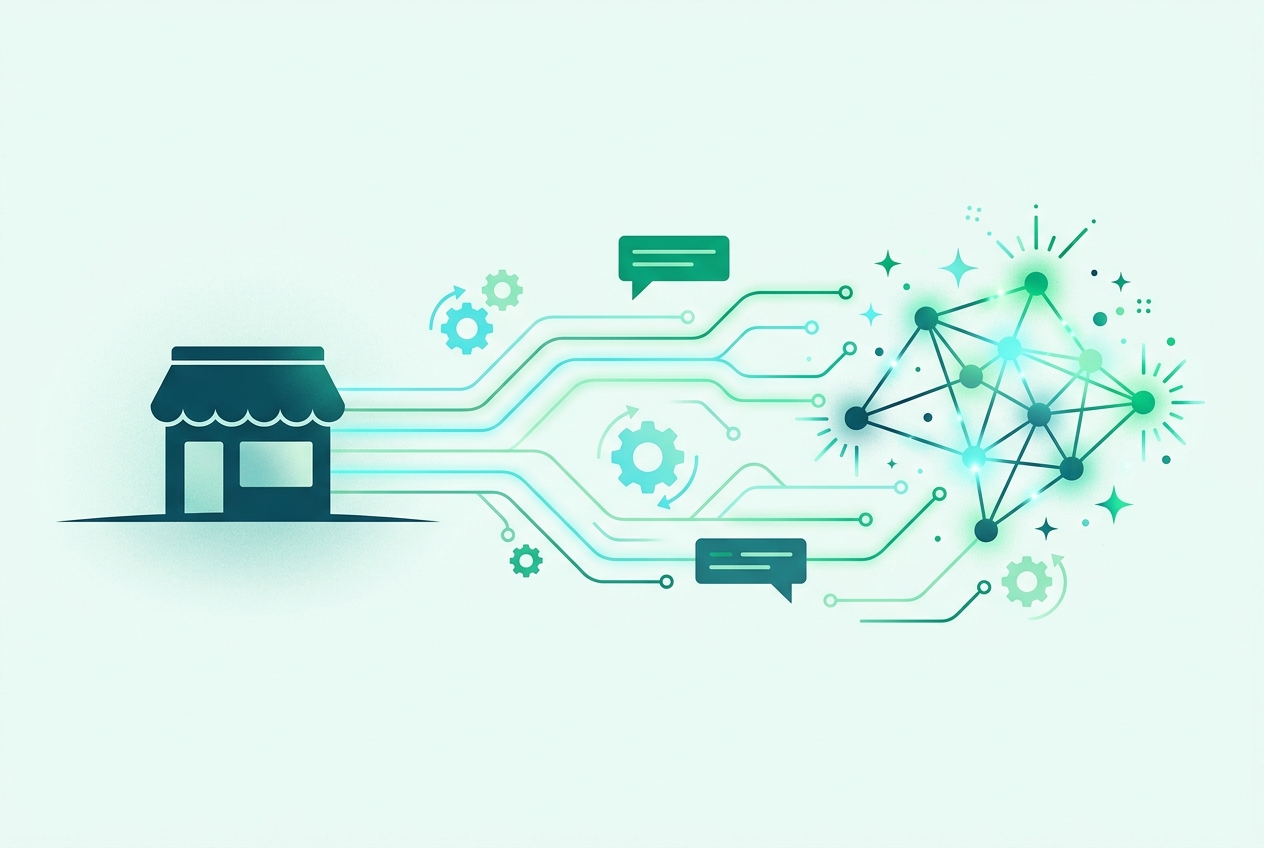
Artificial intelligence is no longer something that exists only in science-fiction movies or large technology companies. Today, AI is becoming part of everyday business.
From customer service and content creation to data analysis, marketing, website development, and automation, businesses of all sizes are beginning to discover ways artificial intelligence can help them work more efficiently.
For small businesses and entrepreneurs in particular, AI can be an interesting opportunity. You may not have a large team. You may not have a huge marketing budget. You may not have enough time to handle every task manually.
But with the right tools and strategy, AI can help you accomplish more with the resources you already have. The important thing, however, is understanding how to use AI intelligently rather than simply using AI because it is popular.
What Exactly Is AI?
Artificial intelligence refers to technology that enables computer systems to perform tasks that traditionally require some form of human intelligence. These tasks can include understanding language, recognizing patterns, generating content, analyzing information, making predictions, and responding to questions.
You may already interact with AI without realizing it. For example, AI can be found in:
- Search engines
- Recommendation systems
- Chatbots
- Voice assistants
- Email tools
- Online advertising
- Customer support systems
- Image-generation tools
- Writing assistants
- Business analytics
The technology is developing rapidly, but its value ultimately depends on how people use it.
1. AI Can Save Businesses Time
Time is one of the most valuable resources for a business owner. There are countless repetitive tasks that consume hours every week: writing simple drafts, organizing information, answering frequently asked questions, creating content ideas, summarizing documents, researching topics, sorting data, planning marketing campaigns.
AI can assist with many of these activities. This does not mean business owners should hand over every responsibility to AI. Instead, AI can handle parts of repetitive workflows while humans focus on decisions that require creativity, judgment, relationships, and experience.
Think of AI as a tool that can help you work faster — not as a replacement for your entire business.
2. AI Can Improve Customer Support
Customers want answers quickly. If someone visits your website at 11:00 PM and has a question about your services, they may not want to wait until the next morning for an answer.
An AI-powered website assistant can help provide immediate responses to common questions. For example: “What services do you offer?” “How can I request a quote?” “What is your ecommerce development process?” “How can I contact your team?”
An AI assistant can provide relevant information and, when necessary, direct the customer to a human representative. This creates a better experience while reducing the number of repetitive questions a business has to answer manually.
3. AI Is Transforming Website Development
Websites are becoming more than collections of pages. Modern websites can incorporate intelligent features that respond to users and automate parts of the customer journey.
Imagine visiting a business website and being able to:
- Ask questions through an AI assistant
- Find relevant products using intelligent search
- Receive personalized recommendations
- Get immediate answers about services
- Submit information through automated forms
- Receive automated follow-up messages
These features can make websites more interactive and useful. However, AI should not be added simply to make a website appear technologically advanced. A feature should exist because it solves a real problem. The best AI experiences are often the ones that feel natural to the user.
4. AI Can Help With Digital Marketing
Marketing requires consistency. Businesses need to continually think about content, campaigns, audiences, messaging, and performance. AI can assist marketers with many parts of this process.
For example, AI can help generate:
- Content ideas
- Social media captions
- Marketing concepts
- Email drafts
- Customer personas
- Campaign variations
- Keyword ideas
- Content outlines
But there is an important distinction. AI can help create content. It does not automatically understand your brand. Your business still needs a human voice. Your experiences, opinions, stories, values, and understanding of your customers are what make your communication unique.
The strongest approach is often: Human strategy + AI assistance + human review.
5. AI Can Help Small Businesses Compete
Large companies often have access to teams of marketers, designers, developers, analysts, and customer support specialists. A small business may have only one or two people doing many of these jobs.
AI can help reduce that gap. With appropriate tools, a small business owner can research ideas, create drafts, analyze information, automate repetitive processes, and explore solutions more quickly.
This does not eliminate the need for expertise. Instead, it can allow a small team to operate more efficiently. The competitive advantage isn't simply having AI. It is knowing where AI can create the most value.
6. AI Can Improve Business Automation
Imagine a potential customer fills out a form on your website. Instead of manually processing everything, an automated workflow could:
- Receive the inquiry
- Organize the customer's information
- Send a confirmation email
- Notify the appropriate person
- Add the lead to a customer management system
- Schedule a follow-up
- Provide the customer with relevant information
This is where AI and automation can become particularly powerful. The goal is not to automate everything. The goal is to identify repetitive processes that slow your business down and determine whether technology can make them simpler.
7. AI Does Not Replace Human Creativity
One of the biggest misconceptions about artificial intelligence is that it will eliminate the need for human creativity. But creativity is more than generating words or images. Creativity involves understanding people, culture, emotions, experiences, problems, and possibilities.
AI can generate options. Humans decide which options actually matter.
A business owner knows their customers. A designer understands visual communication. A marketer understands positioning. A salesperson understands relationships. A leader understands their vision. AI can support these people, but human judgment remains extremely important.
8. Be Careful With AI-Generated Information
AI is powerful, but it is not perfect. It can sometimes produce information that is inaccurate, outdated, incomplete, or presented with too much confidence. That is why AI-generated information should be reviewed before being used publicly or in important business decisions.
This is particularly important for:
- Financial information
- Legal information
- Medical information
- Business statistics
- Technical claims
- Company information
- Customer communications
Using AI responsibly means understanding its limitations. Fast does not always mean correct.
9. Don't Use AI Just Because Everyone Is Talking About It
Every new technology creates excitement. But businesses should avoid chasing trends without understanding the underlying problem. Before implementing an AI solution, ask:
- What problem are we trying to solve?
- Will this improve the customer experience?
- Will it save meaningful time?
- Will it reduce unnecessary costs?
- Will it improve our ability to serve customers?
- Can our team actually maintain it?
If the answer to these questions is no, AI may not be the right solution. Technology should serve the business — not the other way around.
10. The Future Belongs to Businesses That Adapt
Technology has always changed the way businesses operate. The companies that succeed are often those willing to learn, experiment, adapt, and improve. AI is another major technological shift.
Businesses don't necessarily need to become AI companies. They simply need to understand how AI may affect their industry and where it can create genuine opportunities.
A restaurant might use AI to improve customer communication. An online store might use intelligent recommendations. A marketing agency might use AI to accelerate research. A service business might use AI to handle frequently asked questions. A website might use AI to create a more personalized customer experience. The possibilities are broad.
The PURITY Perspective
At PURITY, we believe technology should have a purpose. AI should not simply make a website look futuristic or give a business another buzzword to use in its marketing.
It should solve problems. It should improve experiences. It should save time. It should help businesses communicate more effectively. And when used correctly, it can create opportunities for businesses to operate and grow in smarter ways.
The future of business will not simply be about AI replacing people. It will increasingly be about people who know how to use technology effectively outperforming those who refuse to adapt.
The question every entrepreneur should begin asking is not: “Will AI change my business?” It is: “How can I use AI to make my business better?” That question opens the door to innovation.
Final Thoughts
Artificial intelligence is changing rapidly, and nobody knows exactly what the next few years will look like. But one thing is clear: businesses that learn how to use technology strategically will have more opportunities to adapt.
You don't need to implement every new AI tool. You don't need to become a technology expert overnight.
- Start small
- Identify a problem
- Find a practical solution
- Test it
- Measure the result
- Improve it
- And keep learning
The future belongs to businesses that are willing to evolve.
About the Author
Adebayo Toheeb
Adebayo Toheeb is the CEO of PURITY, with interests in digital marketing, website design and development, public speaking, and business growth. Through PURITY, he focuses on helping individuals and businesses make better use of digital technology to build visibility, credibility, and opportunities online.